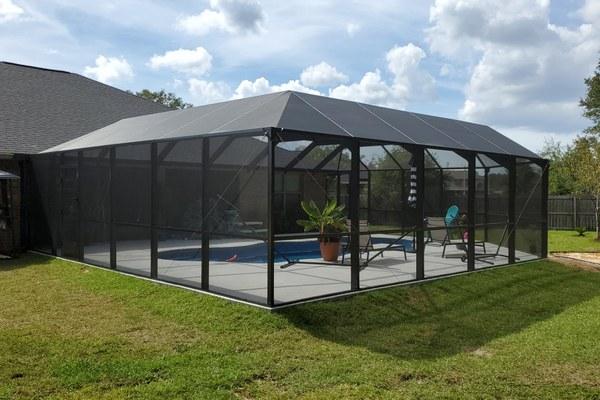
After Isaias: Your Pool May Have Lost Its Safety Barrier
Part of our series on the 10 most common mistakes homeowners make after a hurricane damages their screen enclosure, pool cage, screen room, or patio cover.
For a lot of Florida homes, the pool enclosure does more than keep bugs out. It's the barrier between the pool and everyone else: your kids, the neighbor's kids, the dog, a guest who wanders out back. When Isaias tore that enclosure open or brought it down, the barrier went with it.
That's easy to overlook in the middle of cleanup. The pool is still there, the yard is a mess, and the enclosure feels like a repair job for later. But until something is protecting that water again, the pool is the most dangerous thing on your property.
Why this matters more after a storm
Drowning is the leading cause of unintentional death for Florida children ages 1 to 4, and home swimming pools are where young children are most likely to drown. The weeks after a hurricane add risk on top of that:
Routines fall apart. Schools close, kids are home all day, and adults are distracted by cleanup, insurance calls, and power outages.
More people are in and out of the yard. Neighbors, tree crews, and contractors leave gates open without thinking about it.
The water may be murky. Storm debris and dirt can cloud the water enough to hide the bottom, and anything or anyone on it.
The door from the house is now the only line of defense. In one Florida study of young children's pool drownings, the barrier most often breached was a door leading from the house to the pool area. With the enclosure gone, that door is all that's left.
"When an enclosure was the only thing between a kid and the water, it's not a screen job anymore. It's a safety call, and we treat it like one." — Eric Vanheteren, Aluminum Building Systems
What to do right now
Put up a temporary barrier. Temporary pool fencing, construction fencing, or a rented fence panel system is inexpensive compared to what it prevents. Check with your county building department about what's acceptable while your enclosure is being repaired.
Lock and alarm the doors to the pool. If you don't have door alarms, battery-powered ones are cheap and quick to install. Keep pet doors to the pool area closed.
Make the pool area off-limits to kids, and tell everyone in the house, including visiting family and friends, that the barrier is down.
Don't count on the screen that's left. A torn or sagging enclosure might look like it's still doing its job. If a child or pet can get through, under, or around it, it isn't.
Pool mistakes that make things worse
A few other things we see homeowners do with the pool itself after a storm:
Draining it. It's tempting when the water looks filthy, but groundwater from heavy rain can push up on an empty or partly drained pool and damage it. Leave the water in.
Climbing in to pull out debris. The water can be contaminated, and a storm-damaged enclosure can leave sharp pieces of aluminum and screen on the bottom that you can't see.
Turning the equipment back on too soon. If your pump, heater, lights, or chlorinator got wet, have a licensed electrician or pool professional check them before you flip the breaker.
Water treatment and equipment are a pool company's specialty, not ours, so call your pool service for those. What we can do is get your enclosure rebuilt so the barrier is back where it belongs.
"A pool without its enclosure is a hole in your safety plan. A temporary fence today buys you the time to fix it right." — Eric Vanheteren, Aluminum Building Systems
