
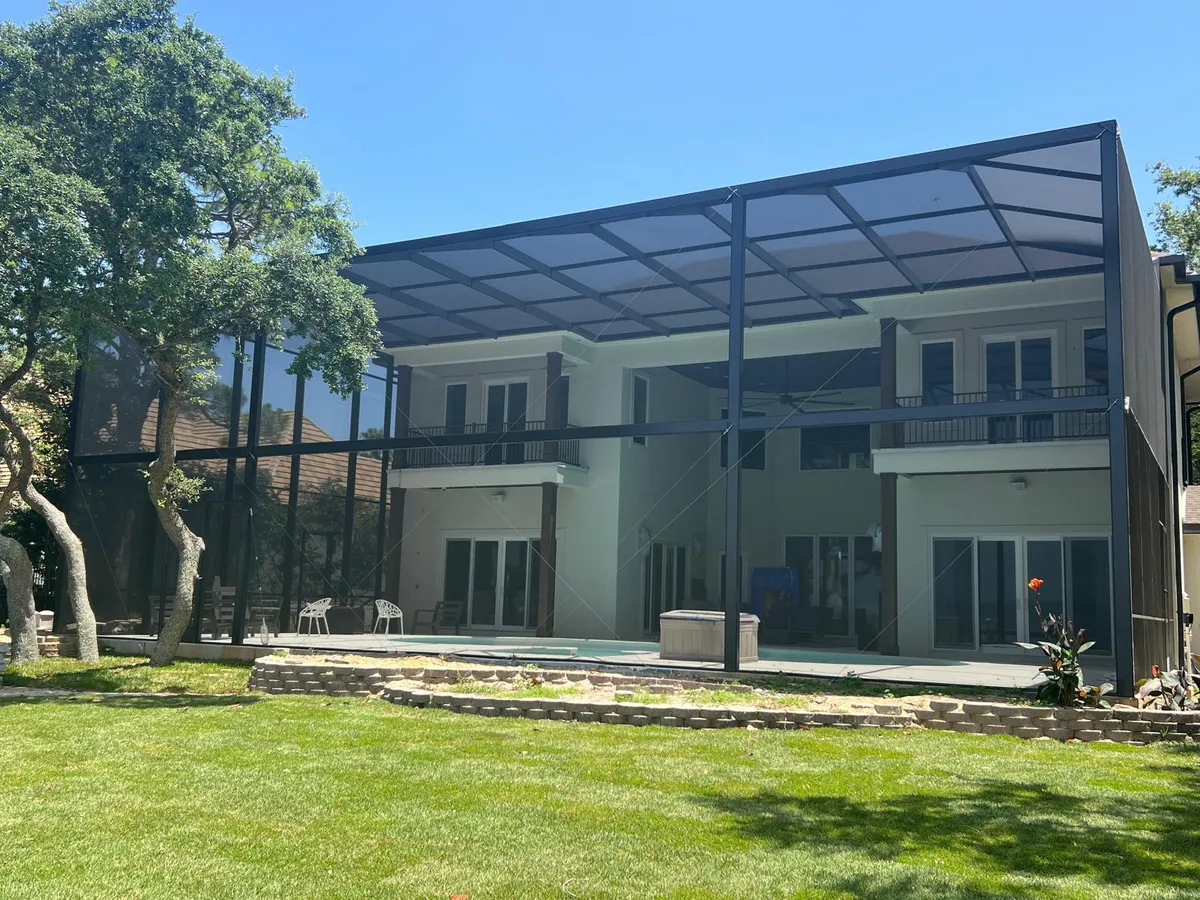
After Isaias: Don't Skip the Permit or Rebuild to Yesterday's Code
Part of our series on the 10 most common mistakes homeowners make after a hurricane damages their screen enclosure, pool cage, screen room, or patio cover.
When an enclosure comes down, the quickest fix sounds like the best one: put it back the way it was, skip the paperwork, and get the backyard back. Some contractors will offer exactly that, usually with a lower price and a faster start date.
It's a mistake that can cost you twice: once when the next storm finds the same weak spots, and again when you try to sell the house.
Why the permit matters
Here in Santa Rosa, Okaloosa, Walton, and Bay counties, replacing screen alone doesn't need a permit, but repairing or rebuilding the frame does. That permit isn't just paperwork. It's the one point in the process where someone independent checks that the structure is designed for your property's wind zone and built the way the plans say.
"We pull a permit on every structural job. It's your proof the work was done right, and you'll want it when you sell." — Eric Vanheteren, Aluminum Building Systems
What skipping it can cost you
Unpermitted work has a way of surfacing later, usually at the worst time:
When you sell. Florida's standard real estate contracts ask sellers about open permits and unpermitted improvements, and buyers routinely search permit records.
When you try to fix it after the fact. Getting an after-the-fact permit typically means penalty fees on top of the normal permit cost, and sometimes changes to bring the work up to current code.
When the house changes hands. Code violations and liens stay with the property, so a future owner inherits them, and a buyer may want them resolved before closing.
And remember the owner-builder trick from our post on checking a contractor's license: if a contractor asks you to pull the permit in your own name, you become the person responsible for the work.
"Put it back the way it was" may not be allowed
Many enclosures in our area were built years ago, under older versions of the building code. When a damaged enclosure is rebuilt, the new structure generally has to meet the code in effect today, not the one in effect when the original went up. Florida's current code uses the latest national wind-load standard, so a replacement built to today's requirements may look a little different from what you had.
"Putting it back the way it was sounds simple. But the way it was is what the storm just tore down." — Eric Vanheteren, Aluminum Building Systems
A code change is coming December 31
There's one more timing detail worth knowing. Florida updates its building code every three years, and the next edition takes effect on December 31, 2026. Projects permitted before that date generally fall under the current code; projects permitted after it fall under the new one. If you're planning a rebuild, ask your contractor which code your project will be permitted under.
How to do it right
Make sure your contractor pulls the permit in their own name.
Ask whether the design is engineered for your property's wind zone.
Make sure the permit gets closed out. Final inspections sometimes depend on other trades working on the same property, so ask your contractor how they'll follow the permit through to the final sign-off.
Keep your permit records, including the final inspection, with your house papers. You'll want them when you sell.


