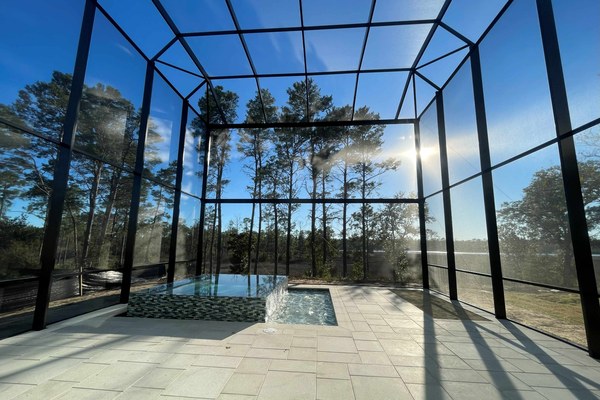
Hurricane Isaias Is Approaching: Screen Enclosure and Patio Prep for Florida Panhandle Homeowners
Understand What Your Enclosure Can (and Can't) Do in a Storm
Your enclosure's aluminum frame is designed, engineered, and permitted to meet or exceed the wind load for your exact property and wind zone — that part holds up. Screen mesh is porous by design, specifically so wind passes through it instead of loading the frame the way a solid surface would. That said, wet, clogged, or debris-packed mesh loses some of that porosity and can catch more wind than clean, dry screening — one more reason clearing debris before the storm matters. Standard insect screening still isn't rated for sustained hurricane-force wind, and panels can tear in a major storm. That's a known characteristic of standard screening, not a defect, and it's generally far simpler and cheaper to fix than structural damage would be.
Clear the Projectile Zone
Bring everything inside — patio furniture, grills, potted plants, hanging décor, umbrellas, and pool toys. High wind can turn a lightweight chair into something that punches straight through screen mesh or a window.
Secure what can't come inside. If your grill has to stay out, anchor it tightly against a solid wall with heavy-duty straps. Never leave a propane tank inside a closed, unventilated patio room.
Manage Wind Pressure the Right Way
Remove screen doors from their hinges if you can do it safely from ground level, and store them inside. It's a simple, low-risk way to relieve pressure.
Know your removable panels. If your enclosure has solid vinyl, acrylic, or tempered glass panels, Florida Building Code requires those to be labeled as removable and taken down when winds are forecast to exceed 75 mph — check for the posted decal, and follow its instructions.
Only cut or remove screen if your enclosure is labeled for it. A Florida Building Commission rule (61G20-1.002) allows enclosures to be engineered with screen panels that are cut, retracted, or removed in high wind. If yours was built that way, those panels carry permanent labels on the frame, and you're required to cut, retract, or remove them as labeled when winds are forecast to exceed 75 mph — do it today, before conditions deteriorate. By rule, none of it should need a ladder. If your enclosure isn't labeled this way, don't cut or remove screen mesh yourself: it doesn't reliably relieve pressure, and it puts you outside in deteriorating weather for no guaranteed benefit. If you're not sure whether your structure qualifies, call us after this storm and we'll check before the next one.
Check Your Hardware and Landscaping
Look, don't fix. Rust and loose fasteners where your aluminum frame anchors to the concrete or the house are worth checking before every storm. If you spot corrosion or play in the connections now, don't try to swap hardware before Isaias — it's structural. Take a photo and call us once the storm has passed; it's a fast fix for us.
Don't start cutting trees now. With landfall this close, fresh-cut limbs and piled branches become projectiles, and nobody should be up a ladder in rising wind. Pick up loose branches and yard debris instead. Put trimming on your list for after the season: keep limbs at least 6–8 feet from the enclosure, because a falling limb does more damage than wind alone, puncturing screens and denting frame members.
Handle Water Before It Becomes a Problem
Clear gutters and downspouts if you can do it safely today. Standing water adds weight it isn't meant to carry, and clogged drainage sends rainwater toward your foundation instead of away from it. This matters most on solid-roof structures like screen rooms or patio covers, where ponding water has somewhere to collect — an all-screen roof lets rain pass straight through.
Don't drain your pool. The water's weight keeps the pool shell anchored against groundwater pressure; a drained pool can actually float or shift. Turn off power to pumps and chlorinators at the breaker, and leave the water in place.
Check your pool cover type before deciding. A loose floating or solar cover can shred in hurricane wind and become debris itself — worth securing or removing. A taut, clipped-down mesh safety cover is porous like screening and is often fine left in place. When in doubt, check your cover manufacturer's storm guidance; it's outside what we install, so we'd rather point you to the right source than guess.
Make sure the ground slopes away from your enclosure's pad, and consider temporary water barriers or sandbags at the base if flooding is a known issue at your property.
Hurricane Screens Are a Different Category Entirely
Hurricane screens aren't something that can go in before Isaias — they need a permit and site-specific engineering. But they're worth knowing about for next season. Motorized hurricane screens (we install the Fenetex MaxForce system) are engineered to withstand winds up to 185 mph and carry Florida Product Approval for use even in High-Velocity Hurricane Zones. If you already have them, lower them fully before the wind picks up, while you still have power. A few things that set them apart from standard screening:
Storm prep in seconds — closed with the touch of a button, even remotely from your phone
No zippers, no blowouts — a continuous bead retention system keeps the screen locked in its track instead of tearing loose
Reinforced corners and a lifetime warranty on the track system itself
If you're tired of a prep routine every time a storm forms, this is the upgrade worth asking about.
After the Storm
Photograph everything before you touch it — torn screening, bent or separated frame members, anything out of place — for insurance purposes.
Watch for structural instability. If beams are bent, twisted, or pulling away from their anchor points, stay clear. The structure may be under tension and could shift further.
Don't inspect or attempt repairs near downed power lines or in standing water.
Call a licensed contractor before any DIY structural repair. Screen replacement is simple. Re-shaping aluminum or replacing frame segments requires site-specific engineering to meet code for the next storm — done wrong, it can create a bigger problem than the one you started with.
Built by a Team That Knows Florida Storms
Aluminum Building Systems has been engineering and building aluminum structures across the Florida Panhandle since 1996 — every enclosure is site-engineered and stamped to the property's exact wind zone, then permitted and inspected to meet or exceed Florida Building Code. Our projects are led by our own in-house crews and supported by long-standing trade partners we've worked with for years, so every job gets the same standard of accountability from design through final walkthrough.
Frequently Asked Questions
Will my screen enclosure survive a hurricane?
The aluminum frame is engineered to your property's wind zone and built to hold. Standard insect screening isn't hurricane-rated and may tear in major wind — that's normal and typically an easy fix afterward.
Should I remove or cut my screens before a storm?
Only if your enclosure is labeled for it. Solid vinyl, acrylic, or glass panels labeled as removable must come down when winds are forecast above 75 mph. Screen panels engineered to be cut, retracted, or removed (Florida Building Commission rule 61G20-1.002) carry permanent labels and must be handled as labeled above 75 mph — and by rule, never with a ladder. If your enclosure isn't labeled this way, don't cut or remove screening yourself. Call us after the storm to find out if your structure qualifies.
What's the difference between my regular screening and a hurricane screen?
Standard insect screening is built for bugs, sun, and debris, not storm-force wind. Hurricane screens like the Fenetex MaxForce system are engineered and product-approved specifically to withstand hurricane-force wind and wind-borne debris.
Should I drain my pool before a hurricane?
No. A drained pool can float or shift from groundwater pressure. Add extra chlorine, shut off the equipment at the breaker, and leave the water in.
Should I leave my pool cover on or take it off?
It depends on the cover. Loose floating or solar covers can shred and become debris — consider securing or removing them. Taut, clipped mesh safety covers are porous and are often fine left on. Check your cover manufacturer's guidance if you're unsure.
How do I know if my enclosure needs repairs after a storm?
Look for torn screening, bent or separated frame members, and loose fasteners. When in doubt, have a licensed contractor inspect it — some stress isn't visible from the ground.
Can ABS do emergency inspections or repairs after a storm?
Yes. Call our office and we'll get you on the schedule as quickly as conditions allow.
